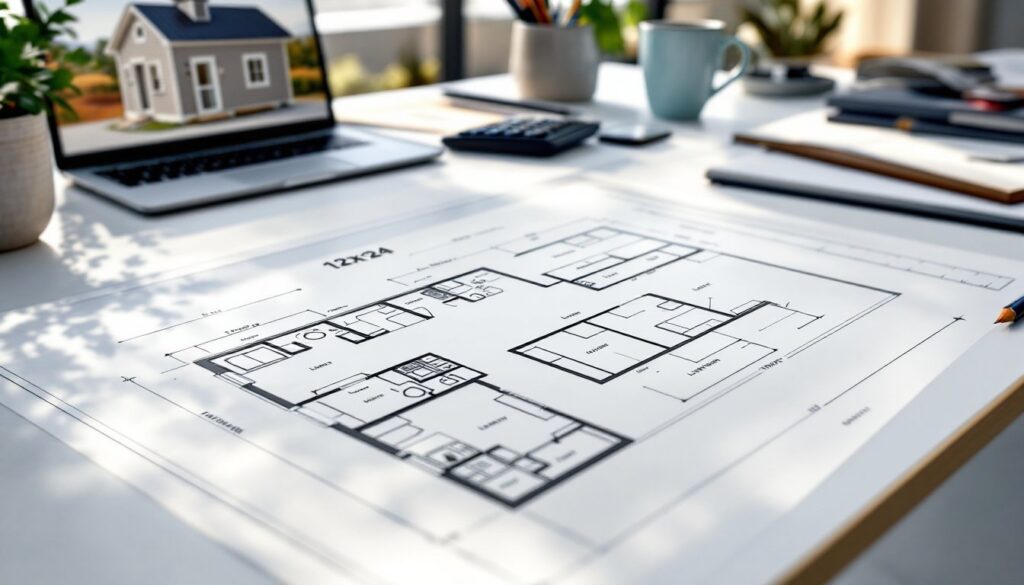
A 12×24 footprint delivers 288 square feet, enough space for a fully functional home when every inch is intentional. This size hits a sweet spot: it’s buildable on a trailer, fits on most residential lots without triggering complex zoning hurdles, and offers real living space beyond cramped micro-dwellings. Whether someone’s planning a backyard ADU, a weekend retreat, or a primary residence, a well-designed 12×24 floor plan can accommodate sleeping, cooking, bathing, and living without feeling like a closet. The key lies in layout choices, vertical space, and knowing which walls to keep and which to lose.
Table of Contents
ToggleKey Takeaways
- A 12×24 tiny house floor plan provides 288 square feet of functional living space that fits standard building dimensions and trailer regulations while avoiding complex zoning hurdles.
- Single-level and lofted layouts each offer distinct trade-offs—single-level maximizes accessibility while lofted designs reclaim valuable floor space for living areas.
- Multi-functional furniture, vertical storage, and smart appliance choices are essential strategies to maximize usable space and eliminate waste in compact 12×24 designs.
- Building codes vary significantly by jurisdiction; a 12×24 structure may qualify as an ADU, park model RV, or shed, each with different permitting requirements and regulations.
- Proper insulation, ductless mini-split climate control, and sealed penetrations are critical in tiny houses due to their high surface-area-to-volume ratio and minimal thermal mass.
- Before construction, verify local codes for egress windows, electrical (NEC compliance), plumbing and septic requirements, and zoning restrictions to avoid unpermitted structure complications.
Why a 12×24 Tiny House is the Perfect Size for Compact Living
The 12×24 dimension isn’t arbitrary, it’s rooted in practical building math. A 12-foot width allows for standard wall framing without excessive customization: most wall studs, insulation batts, and sheathing panels are sized for 8- or 12-foot modules. The 24-foot length divides cleanly into functional zones: 8 feet for a bedroom or loft ladder, 8 feet for a living area, and 8 feet for a kitchen and bath. This proportion also works on trailers rated for tiny house builds, which typically max out at 8.5 feet wide and 24–28 feet long.
At 288 square feet, a 12×24 structure often falls below the minimum square footage thresholds that trigger full residential building codes in many jurisdictions. Instead, it may qualify as an accessory dwelling unit (ADU), a park model RV, or a non-permanent structure, each with lighter permitting requirements. But don’t assume it’s code-free: electrical, plumbing, and egress rules still apply, especially if the build is on a foundation.
This footprint also suits DIY builders. Materials are manageable: a single person can handle 12-foot lumber, and a small crew can frame walls in a weekend. Roofing a 12×24 shed-style or gable structure doesn’t require scaffolding towers or engineered trusses for most designs. Smaller builds mean smaller budgets, less lumber, less siding, less roofing, and critically, less time exposed to weather during construction.
From a lifestyle perspective, 288 square feet forces intentional living. It’s large enough for a full-size bed, a functional kitchen with a range and fridge, and a bathroom with a standard shower. It’s small enough that heating and cooling costs stay negligible. A well-insulated 12×24 can often be conditioned with a single mini-split or a small wood stove, depending on climate.
Popular 12×24 Tiny House Floor Plan Layouts
There are two dominant layout strategies for a 12×24 footprint: single-level and lofted. Each has trade-offs in headroom, accessibility, and usable floor area.
Single-Level Open Concept Design
A single-level layout dedicates the entire 288 square feet to one floor, eliminating stairs or ladders. This approach maximizes accessibility, critical for aging-in-place plans or anyone with mobility limitations. The floor plan typically allocates:
- 6×8 feet for a bedroom with a full or queen bed and narrow closet
- 12×10 feet for a combined living and kitchen zone
- 6×6 feet for a bathroom (shower, toilet, and vanity)
The bathroom usually sits at one end to simplify plumbing runs. The kitchen runs along one wall, using a galley or L-shaped layout with upper and lower cabinets. An open living area anchors the center, often with a fold-down table or Murphy bed to reclaim square footage when not in use.
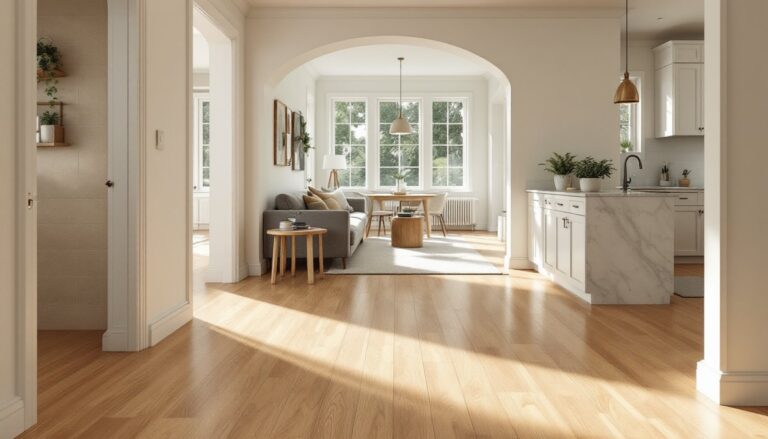
Ceiling height becomes the design lever here. A 10- or 12-foot ceiling with exposed rafters or a cathedral pitch adds volume without adding footprint. Clerestory windows near the roofline bring in light and make the space feel less like a shipping container. For example, builders following energy-efficient construction methods often spec taller walls and continuous insulation to improve thermal performance without sacrificing headroom.
This layout works well for permanent foundations or slab-on-grade builds. It’s also easier to heat and cool, no loft means no stratified air pockets. But it sacrifices some usable space to hallways and door swings, and storage is limited to under-bed drawers, overhead cabinets, and exterior sheds.
Loft Bedroom Floor Plan
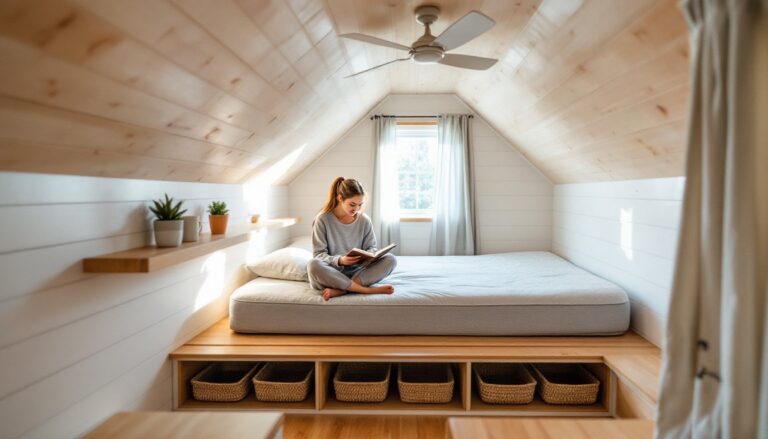
Lofted designs reclaim floor space by stacking the bedroom above the living area. A sleeping loft positioned over the bathroom or kitchen keeps ceiling height in the main living zone at 7–8 feet, while the loft itself usually has 3–4 feet of clearance, enough to sit up in bed, but not to stand.
Typical loft dimensions: 6×12 feet, accessible via a ladder, ship’s stair, or alternating-tread staircase. Ship’s stairs with integrated storage are popular, they double as drawers or cubbies. Alternating-tread stairs meet IRC egress requirements if the loft is considered a sleeping room, but they’re steep and not suitable for everyone.
The ground floor opens up significantly. Without a dedicated bedroom, the full 288 square feet can be split between:
- 12×14 feet for living, dining, and workspace
- 12×6 feet for a galley kitchen
- 6×6 feet for a bathroom
Many builders incorporate custom furniture solutions like built-in benches with storage, fold-down desks, and platform seating that doubles as cabinet space. Vertical storage is critical, floor-to-ceiling shelving, pegboards, and magnetic strips keep counters clear.
The loft approach is common in trailer-based tiny houses because it maximizes usable square footage without increasing the footprint or road width. But lofts aren’t for everyone. Climbing a ladder at 2 a.m. or while sick is a real consideration. They also trap heat in summer and require thoughtful ventilation, usually a ceiling fan or transom vent.
If the loft will be used as a primary bedroom, egress requirements apply in most jurisdictions. This typically means a window with a minimum opening of 5.7 square feet and a sill height no more than 44 inches above the loft floor. Check local codes: some areas classify lofts as storage unless they meet these standards.
Essential Design Elements to Maximize Your 288 Square Feet
Good tiny house design isn’t about cramming in features, it’s about eliminating waste and making every element work twice. Start with these strategies:
Multi-function furniture: A dining table that folds against the wall, a sofa with under-seat storage, or a bed frame with drawers underneath. Avoid furniture that only does one thing. Built-ins save space compared to freestanding pieces, think booth-style seating, murphy desks, and recessed shelving between studs.
Vertical storage: Use the full wall height. Cabinets that go to the ceiling, pegboard walls in the kitchen, and ceiling-mounted pot racks keep clutter off counters. In a 12-foot-wide space, even 6 inches of depth adds up, shallow shelves for spices, books, or toiletries fit between studs (which are typically 14.5 inches on center for 2×4 framing, 22.5 inches for 2×6).
Natural light and sightlines: Small spaces feel larger when light flows through them. Large windows on the long 24-foot walls, glass doors, and skylights reduce the cave effect. Avoid heavy drapes: use cellular shades or sheer curtains. Keep interior walls minimal, half-walls or open shelving define zones without blocking views.
Compact, full-function appliances: A 24-inch range (not a hotplate), a counter-depth refrigerator (often 24 inches deep instead of 30), and a combination washer-dryer if plumbing allows. An on-demand water heater saves space over a 40-gallon tank and reduces energy waste. Many designs inspired by small space living strategies use apartment-sized appliances that fit tight spaces without sacrificing usability.
Smart bathroom layouts: A corner shower (32×32 or 36×36 neo-angle) saves floor space. A wall-hung toilet opens up visual space and simplifies cleaning. A pocket door instead of a swing door reclaims 6–9 square feet. If headroom allows, a composting toilet eliminates the need for a septic or sewer connection, which can be a permit and cost saver in remote builds.
Insulation and climate control: In 288 square feet, poor insulation is immediately uncomfortable. Use closed-cell spray foam in walls and roof for maximum R-value per inch, or dense-pack cellulose if budget is tight. A single ductless mini-split (9,000–12,000 BTU) can heat and cool the entire space efficiently. Seal all penetrations, tiny houses have high surface-area-to-volume ratios, so air leaks matter more than in larger homes.
Exterior storage: A small shed, bike rack, or under-deck storage keeps seasonal gear and tools out of living space. If building on a trailer, tongue-mounted boxes or rear bumper storage are common.
Building Codes and Zoning Considerations for 12×24 Structures
A 12×24 structure straddles the line between shed, ADU, and dwelling, and the rules vary widely by jurisdiction. Here’s what to expect:
Foundation and frost depth: If building on a permanent foundation (slab, crawlspace, or piers), footings must extend below the local frost line, typically 12–48 inches depending on climate. A slab-on-grade with thickened edges and rebar is common for small structures in warm climates. In cold zones, a frost-protected shallow foundation (FPSF) with rigid foam insulation can reduce excavation.
Trailer vs. foundation: Building on a trailer may classify the structure as a park model RV or movable tiny house, which sidesteps some residential codes but subjects the build to RVIA or NOAH standards. Trailers require proper weight distribution, axle rating, and tie-downs. If the structure will be moved, use flexible utilities (PEX for water, quick-disconnect propane) and securing straps for cabinets and appliances.
Electrical: Even tiny houses need to meet NEC (National Electrical Code) requirements. This means GFCI outlets in kitchens and baths, AFCI protection for bedrooms, proper wire gauge for amperage, and a grounded service panel. Most 12×24 homes run on a 30-amp or 50-amp service if all-electric, or 30-amp with propane for cooking and heat. If wiring yourself, plan for inspection, this isn’t a gray-area DIY.
Plumbing and septic: A full bathroom requires drainage. If connecting to municipal sewer, ensure the local code allows structures under 400 square feet. If using a septic system, check minimum bedroom or occupancy requirements, many jurisdictions require a 2-bedroom system regardless of actual size. Composting toilets and greywater systems can reduce or eliminate septic needs, but they’re not legal everywhere. Verify with the county health department before designing around them.
Egress and life safety: If the structure is used as a dwelling, egress windows are required in sleeping areas, minimum 5.7 square feet of opening, 24-inch height, 20-inch width, and sill no higher than 44 inches. Smoke detectors are mandatory, and carbon monoxide detectors are required if there’s any combustion (gas range, wood stove, propane heater).
Zoning and setbacks: Many residential zones prohibit structures smaller than 600–1,000 square feet as primary residences. A 12×24 may qualify as an accessory dwelling unit (ADU), which often requires the primary residence to exist first and imposes setback rules (typically 5–10 feet from property lines). Some jurisdictions cap ADU size at 800 square feet or 50% of the primary dwelling’s footprint. Rural or agricultural zones may be more flexible.
Permits: Even if a permit isn’t required for a “shed,” adding plumbing, electrical, or a sleeping loft often triggers the need for permits and inspections. Unpermitted structures can complicate insurance, resale, and financing. It’s worth a call to the local building department before framing the first wall.
Conclusion
A 12×24 tiny house floor plan isn’t a compromise, it’s a deliberate framework for efficient living. With smart layout choices, thoughtful vertical design, and attention to codes, 288 square feet can deliver a complete, comfortable home. Whether going single-level for accessibility or lofted for floor space, the same principles apply: build with intention, plan for inspection, and make every square foot count.