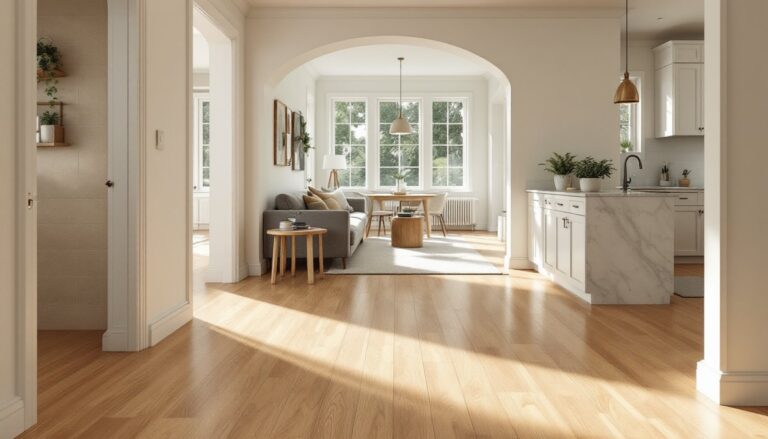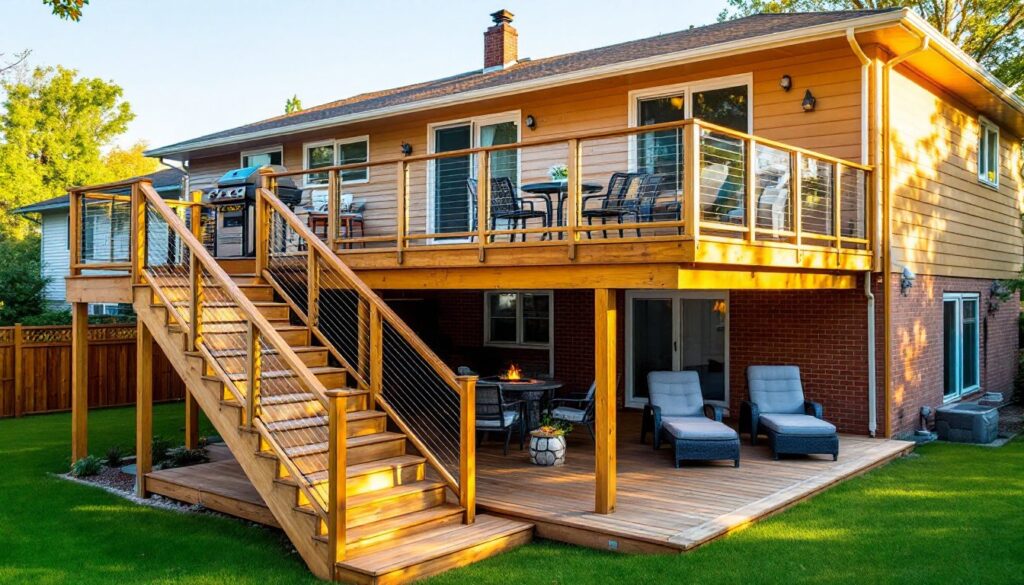
Split level homes present a unique challenge, and opportunity, for outdoor living. Those staggered floor levels that looked so modern in 1965 can actually become the foundation for a deck design that’s anything but cookie-cutter. Whether the home steps up, down, or both, each elevation change creates a chance to add dimension, privacy, and function that a standard ranch simply can’t match. Instead of fighting the architecture, smart deck designs lean into those multiple levels to create distinct zones, reduce the number of stairs needed, and even improve curb appeal from the street.
Table of Contents
ToggleKey Takeaways
- Split level house deck ideas leverage the home’s natural elevation changes to create distinct zones, reduce stair requirements, and improve curb appeal without additional walls or structural complexity.
- Tiered deck designs that mirror each floor level—with platforms sized for specific activities like cooking (12×14 feet) and lounging (10×12 feet)—create a cohesive indoor-outdoor transition.
- Stairs between tiers must follow IRC code standards (7¾-inch maximum rise, 10-inch minimum run), while walkways parallel to the house offer gradual transitions and maximize usable space.
- Wrap-around decks turn multiple sides into continuous outdoor living space but require structural reinforcement like hurricane ties and diagonal knee braces for lateral stability.
- Floating decks are ideal for lower entries near grade level, with costs ranging from $600–$900 for an 80-square-foot project using pressure-treated lumber, concrete pier blocks, and minimal permits.
- Material selection—from budget-friendly pressure-treated pine to maintenance-free composite decking ($4–$8 per linear foot)—should complement the mid-century aesthetic of split level homes while matching railing style to period architecture.
Why Split Level Homes Are Perfect for Creative Deck Designs
Split level architecture breaks a home into three or more short flights of stairs, typically offset by half a story. That vertical stagger means multiple exterior door heights, often a main entry at mid-level, a lower basement or family room exit, and sometimes an upper bedroom level. Each exit becomes a natural anchor point for a deck.
This layout solves two common deck design headaches. First, it reduces the need for tall, code-intensive stair runs. A deck that connects to a lower-level door might only sit 2–3 feet off grade, minimizing railing requirements and material costs. Second, the elevation changes create built-in separation between activity zones, cooking, dining, lounging, or play areas, without adding walls or planters.
From a structural standpoint, attaching ledger boards at different heights distributes load across multiple rim joists and can simplify permitting when done correctly. Always verify local building codes: many jurisdictions require engineered plans for multi-level decks or any deck over a certain height. And because split level homes often have narrow side yards, vertical deck designs maximize usable space without sprawling into setback limits.
Tiered Deck Designs That Follow Your Home’s Natural Flow
A tiered deck mirrors the home’s footprint by stacking platforms at the same elevations as interior floors. The result looks cohesive from inside and out, with each deck level feeling like an extension of the room it adjoins.
Start by identifying which doors will see the most traffic. The kitchen or dining area typically gets the largest platform, plan for at least 12 × 14 feet to accommodate a grill and table. A lower-level deck off a family room can be slightly smaller, around 10 × 12 feet, and might include lounge seating or a fire pit. Use pressure-treated 2×10 or 2×12 joists on 16-inch centers for spans up to 12 feet: longer spans may require engineered lumber or closer joist spacing.
Framing each tier independently simplifies construction and allows for easier future repairs. Attach a 2×8 or 2×10 ledger board to the rim joist with ½-inch lag screws or structural screws at every 16 inches, using flashing tape to prevent water intrusion behind the ledger. Pour concrete footings below frost line, typically 42 inches in northern climates, and use adjustable post bases to fine-tune height.
Connecting Multiple Levels with Stairs and Walkways
Stairs between tiers must meet IRC code: 7¾-inch maximum rise, 10-inch minimum run, and consistent dimensions within ⅜ inch. Use stair gauges on a framing square to lay out stringers, and cut from 2×12 treated lumber for durability. For a half-story elevation change (around 4 feet), expect 6–7 risers.
Walkways that run parallel to the house, rather than straight down, create a more gradual transition and open up space under upper decks for storage or potted plants. A 36-inch-wide walkway meets code and feels comfortable: go to 48 inches if the path will see heavy use. Add 36-inch guardrails with balusters spaced no more than 4 inches apart on any platform over 30 inches above grade.
Wrap-Around Decks for Maximum Outdoor Living Space
Wrap-around decks turn multiple sides of a split level home into usable outdoor area, connecting upper and lower levels in a continuous loop. This layout works especially well when the home has doors on adjacent walls or when views or sun exposure vary by side.
Design the deck to follow the roofline and window placement. Avoid blocking lower-level windows with the upper deck platform: if that’s unavoidable, install clear polycarbonate panels along the top deck’s edge to preserve natural light. Frame the upper section first, then tie in lower platforms with angled or L-shaped stair runs.
Because wrap-arounds often include long runs of decking boards, plan for expansion gaps, ⅛ to ¼ inch between boards for pressure-treated wood, slightly less for composite. Run boards perpendicular to the house on one level and parallel on another to visually separate zones and reduce material waste from angled cuts. Many homeowners exploring multi-level garden layouts find that staggered deck sections create natural planting pockets between tiers.
A wrap-around adds significant lateral load, especially in wind. Use hurricane ties or structural brackets at every joist-to-beam connection, and consider adding diagonal knee braces from posts to beams on exposed corners. Consult a structural engineer if the upper deck sits more than 8 feet above grade or if soil conditions are questionable.
Floating Decks and Ground-Level Options for Lower Entries
Floating decks, built on pier blocks or poured footings without attaching to the house, are ideal for split level lower entries that sit close to grade. Because they’re freestanding, many municipalities don’t require permits for decks under 200 square feet and less than 30 inches high, though rules vary.
Start by leveling the site and laying landscape fabric to suppress weeds. Set precast concrete pier blocks on tamped gravel every 4–6 feet in a grid pattern, then rest 4×4 posts or double 2×6 beams directly on the blocks. Frame the deck with 2×6 joists on 16-inch centers, fastening with joist hangers. For ground-level decks, use pressure-treated lumber rated for ground contact (rated .60 retention) to resist rot.
Floating decks simplify construction on slopes. Instead of digging deep footings and building tall posts, step the deck down in short platforms that hug the grade. A two-tier floating deck can transition a 24-inch grade change with just one short step, reducing fall hazards and material costs.
Drainage matters more at ground level. Slope the site away from the house at ¼ inch per foot minimum, and leave gaps between deck boards for water to pass through. Avoid solid skirting: use lattice or horizontal slats to allow airflow under the deck and prevent moisture buildup.
Materials and Finishes That Complement Split Level Architecture
Split level homes from the 1960s and ’70s typically feature horizontal siding, brick, or board-and-batten exteriors with earth-tone palettes. Deck materials should either match that aesthetic or provide deliberate contrast without clashing.
Pressure-treated pine remains the most budget-friendly framing and decking option at roughly $2–$3 per linear foot for 5/4×6 deck boards. It weathers to gray unless sealed annually with a water-repellent stain. For a cleaner look, choose composite decking like Trex or TimberTech, which resists fading and splintering. Composites cost $4–$8 per linear foot but require no staining, just occasional soap-and-water cleaning.
Cedar or redwood splits the difference in cost and maintenance. Both resist rot naturally and take stain well, but they’ll still need resealing every 2–3 years. Use tight vertical-grain boards for decking to minimize cupping. For framing and posts, stick with pressure-treated lumber: cedar and redwood lack the structural strength for joists and beams.
Railing style dramatically affects curb appeal. Cable railing (horizontal stainless cables on posts) maintains sightlines and suits modern split levels. Vertical balusters, wood, metal, or composite, offer a traditional look and meet code with 4-inch maximum spacing. Avoid overly ornate Victorian-style railings on a mid-century split level: the mismatch will stand out.
Many builders following guidelines in advanced framing resources recommend through-bolting railing posts to rim joists and blocking for maximum strength, especially on upper-level decks.
Budget-Friendly DIY Deck Projects for Split Level Homes
A small single-level deck off a lower entry can be a weekend project for two people with moderate carpentry skills. Target a footprint around 8 × 10 feet, small enough to skip complex framing but large enough for a bistro set or a pair of chairs.
Materials list for an 80-square-foot floating deck:
• Six precast concrete pier blocks
• Four 4×4 pressure-treated posts, 8 feet long
• Two 2×8 pressure-treated beams, 10 feet long
• Ten 2×6 pressure-treated joists, 8 feet long
• Seventeen 5/4×6 deck boards, 10 feet long
• Joist hangers, structural screws, and galvanized nails
• Landscape fabric and gravel for base prep
Expect to spend $600–$900 depending on local lumber prices. Add another $200–$400 for basic tools if starting from scratch: a circular saw, speed square, post level, drill/driver, and tape measure.
For a stepped two-tier design, double the materials and add stair stringers. Cut stringers from 2×12 treated lumber using a stair gauge clamped to a framing square, this ensures consistent rise and run. Treads should be 2×6 or two 2×6 boards side by side for an 11-inch run.
Safety notes: Wear safety glasses and work gloves at all times. Use hearing protection when cutting with a circular saw. Pressure-treated lumber contains copper-based preservatives: wear a dust mask when cutting and wash hands before eating. Homeowners interested in regional outdoor living styles often incorporate covered sections or pergolas to extend deck usability in hot or rainy climates.
Skip the DIY route if the deck will be over 6 feet high, requires complex multi-level engineering, or if local codes mandate a licensed contractor. Poorly built elevated decks are a serious safety hazard.