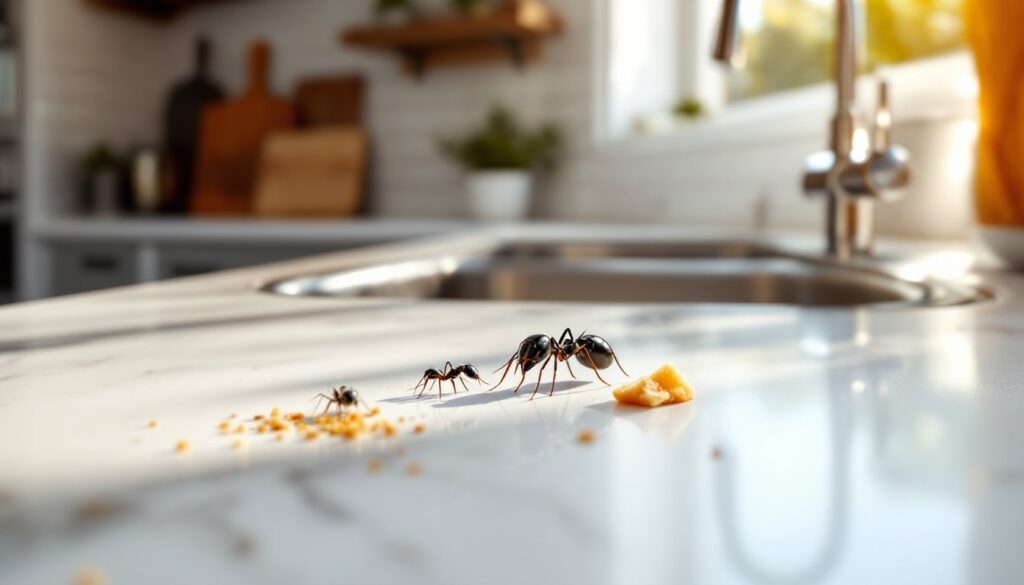
If you’ve spotted a thin black line marching across your kitchen counter or a cluster congregating near the sink, you’re not alone. Tiny black ants are among the most common household pests in North America, and they’re relentless when they find a food source. Unlike termites or carpenter ants, these invaders won’t destroy your framing, but they’ll absolutely raid your pantry and test your patience. The good news? Most infestations can be handled without calling an exterminator, if you act quickly and target both the workers you see and the colony you don’t.
Table of Contents
ToggleKey Takeaways
- Tiny black ants in house problems typically stem from odorous house ants or little black ants, which require targeting the entire colony—not just visible workers—to eliminate the infestation permanently.
- Boric acid and sugar bait is the most effective DIY remedy; mix 1 part boric acid with 3 parts powdered sugar and place along ant trails so workers carry it back to destroy the colony.
- Seal foundation cracks, install door sweeps, and eliminate moisture sources like leaky faucets to prevent tiny black ants from entering your home in the first place.
- Store food in airtight containers, wipe counters nightly, and keep pet food off the floor overnight, since even small crumbs and spills trigger scouting missions that lead entire colonies indoors.
- Use liquid ant baits or non-repellent sprays rather than surface sprays, which scatter colonies and cause ‘budding’—a process where queens split off to form multiple new nests.
- Create a perimeter barrier with granular bait or non-repellent spray twice yearly in spring and fall, and monitor for scout ants early to prevent a full-blown infestation.
What Are Tiny Black Ants and Why Are They in Your Home?
The term “tiny black ant” usually refers to several species, but odorous house ants (Tapinoma sessile) and little black ants (Monomorium minimum) are the most common culprits. Workers measure just 1/16 to 1/8 inch long, making them easy to overlook until they’re everywhere.
These ants don’t tunnel into wood like carpenter ants. Instead, they nest in wall voids, beneath flooring, inside insulation, or outdoors under stones and mulch. They’re attracted to moisture and sugary or greasy foods, which is why kitchens and bathrooms are prime real estate. A single crumb of dried fruit or a drip of soda is enough to trigger a scouting mission, and once one ant finds it, the rest follow the pheromone trail back to your home.
Odorous house ants get their name from the rotten coconut smell they emit when crushed. If you’ve ever squashed an ant and caught a whiff of something foul, that’s your confirmation. Little black ants are less aromatic but just as persistent. Both species form large colonies with multiple queens, which is why surface-level sprays rarely solve the problem. You’re killing workers, not the source.
How to Identify the Type of Tiny Black Ant You’re Dealing With
Not all small dark ants are the same, and misidentification can waste time and money on ineffective treatments. Here’s how to narrow it down:
Size and color: Odorous house ants are dark brown to black, about 1/8 inch. Little black ants are jet black and slightly smaller at 1/16 inch. Both have a single-segment waist (petiole) between the thorax and abdomen.
Behavior: Do they move in tight, organized trails? That’s typical of both species. If they scatter erratically when disturbed, you might be dealing with pavement ants or a different genus.
Smell test: Gently crush one ant with a paper towel. A strong, sweet-rotten odor means odorous house ants. No smell? Likely little black ants.
Nesting sites: Odorous house ants prefer indoor nesting during wet or cold weather, check under sinks, behind baseboards, or inside wall cavities near plumbing. Little black ants usually nest outdoors but forage inside: look for mounds in cracks in your foundation or along sidewalks.
If you’re seeing winged ants (swarmers) or larger individuals mixed in, you may have carpenter ants, which require a different approach and possibly professional intervention since they can compromise structural wood. When in doubt, capture a few ants in a sealed baggie and bring them to your local extension office or a pest control company for free ID.
Common Entry Points and What Attracts Them Inside
Ants don’t need much space. A gap the width of a credit card is an open door. Here’s where they’re getting in, and what’s rolling out the welcome mat.
Entry points:
- Foundation cracks: Even hairline cracks in poured concrete or block foundations.
- Utility penetrations: Gaps around pipes, electrical conduit, HVAC lines, or cable entry points.
- Door sweeps and weatherstripping: Worn or missing seals on exterior doors, especially garage and basement access.
- Window frames: Gaps in caulking or where the sill meets the framing.
- Weep holes: Brick veneer homes have intentional drainage gaps that ants exploit.
Attractants:
- Food residue: Crumbs, spills, pet food left out overnight, or uncovered compost bins.
- Moisture: Leaky faucets, condensation under sinks, or poorly vented bathrooms create ideal conditions.
- Honeydew-producing insects: If you have aphids on houseplants or scale insects, ants will “farm” them for the sugary secretion.
- Landscaping contact: Mulch, soil, or plants touching your siding give ants a direct bridge indoors.
Ants are opportunistic. They’ll scout year-round in warmer climates, but spring and fall bring the biggest surges as colonies expand or seek shelter. Addressing entry points through home organization tips and sealing can significantly reduce risk before an infestation takes hold.
DIY Methods to Get Rid of Tiny Black Ants Fast
You’ve got two goals: eliminate the workers you see and destroy the colony you don’t. Surface sprays and swatting are tempting but counterproductive, they scatter the colony and trigger “budding,” where queens split off to form new nests.
Natural Home Remedies That Actually Work
Boric acid and sugar bait is the gold standard for DIY ant control. Mix 1 part boric acid (available at hardware stores) with 3 parts powdered sugar. Add just enough water to form a paste. Place small dabs on cardboard or jar lids along trails and near entry points. Workers carry it back to the nest, where it disrupts the colony’s digestive system. Keep this away from pets and kids, it’s low-toxicity but not edible.
Diatomaceous earth (DE): Food-grade DE is a fine powder that damages ant exoskeletons on contact. Dust it into cracks, behind appliances, and along baseboards. It’s slow-acting and works best in dry areas. Wear a dust mask during application: inhaling any fine dust isn’t great for your lungs.
Vinegar disruption: A 50/50 mix of white vinegar and water in a spray bottle won’t kill ants, but it erases pheromone trails and confuses scouts. Wipe down counters, baseboards, and windowsills daily until activity stops. This is a supplement, not a standalone solution.
Boiling water for outdoor nests: If you’ve located an outdoor colony near your foundation, pour a kettle of boiling water directly into the entrance. This is effective for small nests but won’t reach deep or sprawling colonies.
Effective Store-Bought Solutions for Homeowners
Liquid ant baits (like Terro or Combat) contain borax or fipronil in a sweet gel. Place stations along active trails, not where you want ants gone, but where they’re already traveling. Expect activity to increase for 24–48 hours as workers recruit more foragers. That’s normal. Within a week, you should see a sharp drop-off.
Granular baits work well for outdoor perimeter treatment. Broadcast products like Amdro around your foundation, focusing on areas within 3 feet of the house. Water lightly after application to activate the bait.
Non-repellent sprays (fipronil or indoxacarb-based) let ants cross treated surfaces and carry the toxin back to the nest. These are more effective than repellent pyrethroids, which just push ants to a new entry point. Apply to cracks, crevices, and along baseboards per label instructions. Always wear gloves and safety glasses, and ventilate the area.
Dust insecticides (like Delta Dust or Tempo) are ideal for wall voids, electrical boxes, and other hidden spaces. You’ll need a hand duster (about $10–15) to apply it properly. Drill small access holes if needed, puff in the dust, then patch and paint. This is a more advanced DIY step, if you’re not comfortable opening up walls, call a pro.
Many professional pest control strategies involve these same active ingredients but with commercial-grade concentrations and application equipment.
Long-Term Prevention Tips to Keep Ants Out for Good
Once you’ve knocked down the active infestation, prevention is about eliminating access and motivation. Here’s how to make your home less appealing.
Seal every crack: Use silicone caulk for gaps around windows, doors, and utility penetrations. For foundation cracks wider than 1/8 inch, use polyurethane or epoxy crack filler. This isn’t just ant control, it’s also energy efficiency and moisture management.
Install or replace door sweeps: A nylon-bristle or rubber sweep on exterior doors should leave no gap when closed. Check garage doors especially: the rubber seal degrades in sunlight.
Cut off the food supply: Store pantry staples in airtight containers (glass or hard plastic). Wipe counters nightly. Don’t leave pet food out overnight, and rinse recyclables before tossing them in the bin. Even a sticky jar lid is an attractant.
Fix moisture issues: Repair leaky faucets, P-traps, and supply lines. Use a dehumidifier in basements or crawlspaces if relative humidity exceeds 60%. Ants need water as much as food.
Manage landscaping: Pull mulch, soil, and plants at least 6 inches away from your foundation. Trim tree branches and shrubs that touch your siding. Consider switching from wood mulch to gravel or rubber mulch in the first 1–2 feet around the house, it’s less hospitable to nesting.
Create a barrier: Apply a perimeter treatment with granular bait or non-repellent spray twice a year (spring and fall). Focus on the base of the foundation and 2–3 feet up the wall if you’re using a liquid.
Monitor and respond early: Catching a few scout ants is way easier than fighting an established colony. Keep bait stations on hand and deploy them at the first sign of activity.
For more ideas on maintaining a clean, organized home that discourages pests, decluttering strategies can help eliminate hidden attractants and make inspections easier.
Tiny black ants are persistent, but they’re not invincible. With the right combination of baiting, exclusion, and sanitation, most homeowners can regain control without professional help. Stay patient, colonies take time to collapse, and don’t skip the prevention work once they’re gone. A little caulking and habit change now beats fighting the same battle next spring.