A lake house bedroom should feel like waking up on vacation, calm, airy, and connected to the water just outside the window. Unlike a primary residence, this space doesn’t need to be practical for rushed mornings or closet overflow. It’s a retreat, and the design should reflect that. The good news? Most lake house bedroom transformations are cosmetic projects that don’t require permits or structural work. With the right materials, colors, and layout tweaks, homeowners can create a bedroom that captures the relaxed vibe of waterfront living without a gut renovation.
Table of Contents
ToggleKey Takeaways
- Lake house bedroom ideas should prioritize natural materials like reclaimed wood, linen bedding, and jute rugs that age well in humid waterfront environments and enhance the relaxed aesthetic.
- Choose a soothing color palette inspired by water—soft whites, pale grays, muted sage greens, and faded blues—while avoiding overly saturated colors that feel dated.
- Maximize natural light and lake views by using sheer linen curtains, strategic mirrors, and skylights rather than heavy drapes that block sightlines.
- Incorporate lakeside decor subtly through functional items like vintage oars, rope-wrapped accessories, and local artwork rather than clichéd nautical symbols.
- Create a cozy reading nook or window seat with a high-quality cushion, throw pillows, and task lighting to transform unused space into the room’s best feature.
- Select durable, unpretentious furniture in painted wood or rattan with finishes that hide wear, avoiding precious or high-maintenance pieces that don’t suit a casual waterfront setting.
Embrace Natural Materials and Textures
Lake house bedrooms feel most authentic when they lean into natural, tactile materials. Think reclaimed wood, linen bedding, and jute or sisal rugs. These materials age well in high-humidity environments and don’t compete with the view.
Shiplap or tongue-and-groove paneling is a classic choice for accent walls. If installing from scratch, use 1×6 or 1×8 nominal pine boards (actual dimensions: 5.5″ or 7.25″ wide). Mount them horizontally with a nickel-gap spacing (about 1/8″) for a clean, modern look. Pre-primed MDF shiplap is an affordable alternative, but real wood handles moisture fluctuations better in lakefront settings.
For bedding, skip synthetic microfiber. 100% linen or washed cotton duvet covers in neutral tones (oatmeal, sand, soft gray) add texture without pattern overload. Layer with a chunky knit throw or a lightweight cotton blanket for warmth on cool mornings.
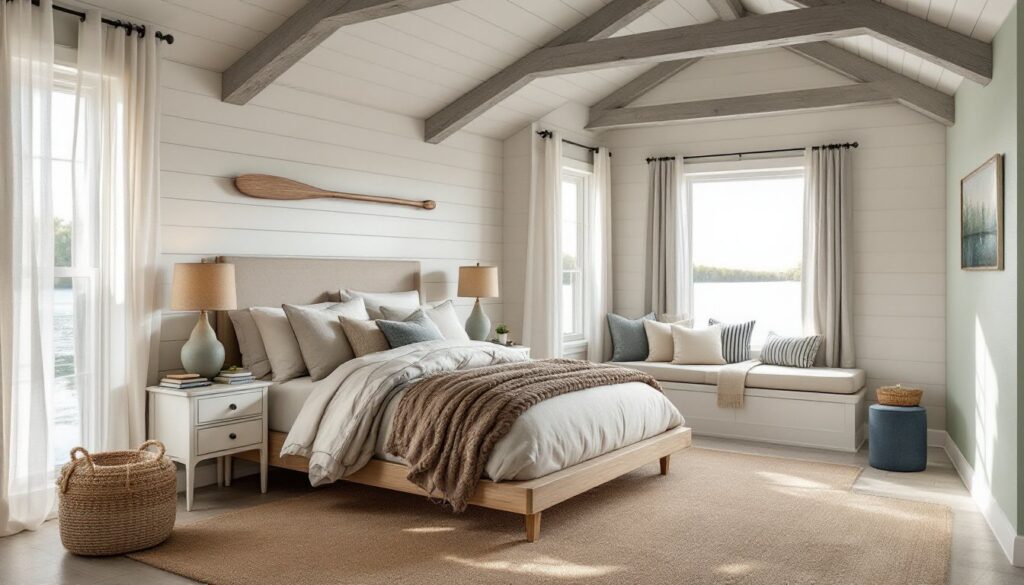
Exposed ceiling beams, real or decorative, add architectural interest. If the bedroom has a vaulted ceiling, consider leaving structural beams visible or adding faux beams made from hollow polyurethane (lighter and easier to install than solid wood). Stain them in a weathered gray or driftwood finish to tie into the lakeside palette.
Avoid overly glossy finishes. Matte or satin sheens on wood, walls, and textiles feel more organic and won’t reflect harsh midday sun.
Choose a Soothing Color Palette Inspired by the Water
The best lake house bedrooms borrow directly from the landscape. Soft blues, greens, and sandy neutrals create a cohesive backdrop that doesn’t fight the view. But this doesn’t mean painting everything baby blue, subtlety is key.
Start with walls in a warm white or pale gray. Benjamin Moore’s “White Dove” (OC-17) or Sherwin-Williams’ “Repose Gray” (SW 7015) are reliable neutrals that work in both north- and south-facing rooms. For a touch of color, try a muted sage green or faded denim blue on a single accent wall behind the bed.
Ceiling color matters, especially in rooms with sloped or vaulted ceilings. A soft blue ceiling (sometimes called a “haint blue”) mimics the sky and adds visual height. Traditional choices include Farrow & Ball’s “Borrowed Light” or Benjamin Moore’s “Palladian Blue” (HC-144), both of which shift tone depending on natural light.
Woodwork and trim can stay white for contrast, or go tone-on-tone with the walls for a more contemporary feel. If the bedroom has older wood paneling that needs refreshing, a diluted whitewash (equal parts white latex paint and water) preserves the grain while lightening the space.
Accent colors should be pulled from nature: terracotta, driftwood brown, or soft navy. Use these sparingly in pillows, artwork, or a single upholstered chair. Overly saturated colors (bright turquoise, fire-engine red) feel more beach-themed than lakeside and can date quickly.
Maximize Natural Light and Lake Views
If the bedroom has a lake view, the window treatment strategy is simple: get out of the way. Heavy drapes and fussy valances block light and obstruct sightlines. The goal is to frame the view, not cover it.
Sheer linen curtains mounted on a simple rod allow privacy without sacrificing natural light. Hang them as close to the ceiling as possible (use a rod mounted 2–4 inches below the ceiling line) and let them puddle slightly on the floor for a relaxed, high-end look. For blackout needs, especially in bedrooms facing east, add cellular shades or roller blinds mounted inside the window frame. These can be drawn at night and disappear during the day.
If the bedroom lacks a view or has small windows, adding a window or enlarging an existing one is a worthwhile investment. This is structural work that requires a permit in most jurisdictions and should be handled by a licensed contractor. The project involves cutting into exterior walls, installing a header beam (sized according to span and load, consult IRC tables or a structural engineer), and ensuring proper flashing and weatherproofing.
For a less invasive upgrade, install a skylight or sun tunnel. A skylight over the bed brings in morning light and nighttime stargazing. Velux and Fakro both make quality fixed or venting models. Expect to pay $800–$1,500 for materials and professional installation. DIY installation is possible for experienced roofers, but improper flashing can lead to leaks, this isn’t a beginner project.
Mirrors strategically placed opposite windows amplify light and views. A large leaning mirror (at least 30″ x 60″) propped against a wall reflects the lake without requiring wall anchors.
Incorporate Nautical and Lakeside Decor Elements
Nautical decor can veer into kitsch quickly, anchors, ropes, and ship wheels feel more suited to a coastal gift shop than a restful bedroom. The trick is to reference lakeside life subtly, using functional or sculptural objects rather than literal symbols.
Vintage oars or a canoe paddle mounted horizontally above the bed make a strong focal point. Sand and refinish them if they’re weathered, or leave the patina intact for character. Mounting hardware should hit wall studs (typically 16″ on center) to support the weight, use a stud finder and 2.5″ wood screws.
Rope accents work best when they serve a purpose: a rope-wrapped table lamp base, a jute-wrapped mirror frame, or a simple rope towel holder. Avoid decorative rope coiled in a bowl, it reads as filler.
Lake-inspired artwork should feel personal, not mass-produced. Framed vintage maps of the lake, black-and-white photos of historic boathouses, or watercolor paintings by local artists add context. Skip the generic “LAKE LIFE” signs in distressed wood, they’re overplayed.
For a sculptural element, consider a driftwood branch arranged in a tall vase or a piece of lake stone used as a bookend. These are free, site-specific, and impossible to replicate.
Textiles can nod to maritime tradition without being heavy-handed. A ticking stripe duvet or navy-and-white throw pillows reference classic boat upholstery. Keep patterns minimal, one or two striped pieces max.
Create a Cozy Reading Nook or Window Seat
A window seat or reading nook turns dead space into the best spot in the house. If the bedroom has a bay window, dormer, or alcove, it’s a natural candidate. If not, a corner with good light and a comfortable chair works just as well.
For a built-in window seat, the frame is straightforward carpentry. Use 2×4 framing to build a box at the desired height (typically 16–18 inches for seating comfort). Sheath the frame with 3/4″ plywood for the top and 1/2″ plywood or MDF for the sides. Add a piano hinge if the seat will double as storage, great for off-season linens or extra blankets.
The cushion makes or breaks the comfort. A 4-inch high-density foam cushion (minimum 2.5 lb density) wrapped in batting and covered with durable fabric (canvas, linen, or outdoor-grade fabric for moisture resistance) will hold up to daily use. Measure the seat top precisely and have a local upholsterer fabricate the cushion, or DIY it with foam from a fabric store and a staple gun.
Throw pillows (12″–18″ square) in varying textures add back support. Use feather or down inserts for a plush feel, not polyester fiberfill.
If a built-in isn’t feasible, a slipcovered armchair or upholstered bergère positioned near a window with a small side table and a swing-arm wall lamp creates the same effect. The lamp should be mounted at shoulder height when seated (roughly 48–54 inches from the floor) and wired into an existing junction box or plugged into a nearby outlet.
Include a small bookshelf or floating shelf within arm’s reach. 8–10-inch-deep shelves are enough for paperbacks and won’t protrude into the room.
Select the Right Furniture for a Lake House Aesthetic
Lake house furniture should be durable, unpretentious, and easy to move. Unlike primary home renovations that prioritize longevity, lake house pieces often take more wear, wet swimsuits, sandy feet, and heavy seasonal use.
Bed frames in painted wood, wrought iron, or rattan fit the aesthetic. A low-profile platform bed in whitewashed oak or a simple metal frame with a linen-upholstered headboard keeps the room feeling light. Avoid oversized upholstered headboards in velvet or tufted fabric, they’re too formal for a lakeside setting.
Nightstands should be small-scale and functional. A 22–24-inch-wide table is enough for a lamp, book, and water glass. Consider mismatched vintage pieces (a painted side table on one side, a small wooden stool on the other) for a collected-over-time feel. This approach also makes updating your space easier and more affordable.
Dressers and storage should be minimal. If closet space is tight, a freestanding wardrobe or open clothing rack in black metal or natural wood keeps things accessible without built-ins. For additional storage, consider under-bed drawers on casters, useful for stashing extra bedding or seasonal gear.
Seating beyond the bed is a nice-to-have, not a must. A slipcovered bench at the foot of the bed or a pair of woven stools can double as luggage racks or extra seating when guests visit.
Skip anything too precious or high-maintenance. Lacquered finishes, glass-top tables, and silk rugs don’t belong in a space where the design approach is casual and function comes first. Choose finishes that hide wear, distressed paint, oil-rubbed bronze hardware, and matte surfaces age gracefully.
Conclusion
A well-designed lake house bedroom doesn’t require a full gut job or a designer budget. Focus on natural materials, a restrained color palette, and furniture that fits the scale and purpose of the space. Prioritize the view, let in the light, and skip the decor that screams “theme.” The result is a room that feels like a true retreat, one that makes coming back to the lake house the best part of the week.