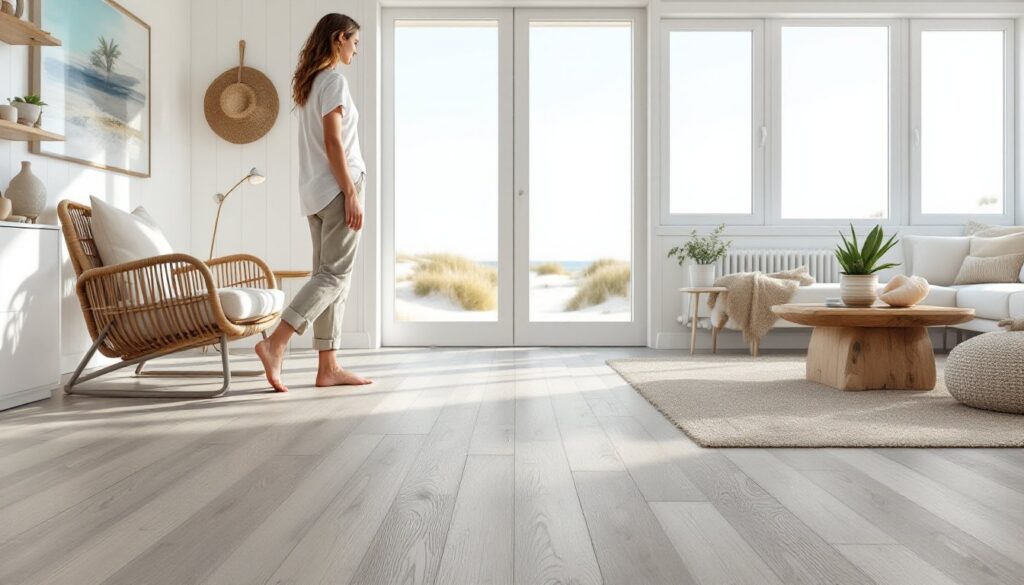
Choosing the right flooring for a beach house isn’t just about aesthetics, it’s about survival. Salt air, tracked-in sand, humidity spikes, and wet feet from the shore wreak havoc on materials that work fine inland. The wrong choice leads to warped boards, mold growth, and a floor replacement bill that’ll make you wish you’d done more assignments. But get it right, and you’ll have a surface that handles the coastal beating while still looking sharp. This guide walks through the best flooring options for beach houses, weighing durability, moisture resistance, maintenance, and style so homeowners can make a choice they won’t regret three summers in.
Table of Contents
ToggleKey Takeaways
- Luxury vinyl plank and porcelain tile are the top beach house flooring ideas due to their 100% waterproof nature and resistance to salt air, sand abrasion, and humidity damage.
- Engineered hardwood offers coastal elegance with moisture resistance superior to solid wood, making it ideal for bedrooms and living areas when paired with tile or LVP in wet zones.
- Concrete flooring delivers modern aesthetics, low maintenance, and superior durability, though it requires professional installation and professional-grade sealing to resist moisture and staining.
- Avoid porous materials like solid hardwood, cork, and bamboo in high-moisture areas; these eco-friendly options work only in climate-controlled spaces away from entryways and bathrooms.
- Beach house flooring success depends on matching material selection to specific room exposure levels and your willingness to maintain sealing and protective finishes over time.
- Larger format tiles and quality wear layers (20+ mils for vinyl) reduce crevices where sand accumulates and extend the lifespan of your coastal flooring investment.
Why Flooring Matters in Beach House Design
Beach houses sit in one of the harshest environments for building materials. Constant humidity, often above 60%, creates the perfect breeding ground for mold and mildew. Sand acts like sandpaper, grinding down finishes with every footstep. Salt air corrodes metal fasteners and seeps into porous surfaces. And then there’s water: tracked in from the beach, dripped from swimsuits, splashed from a post-swim rinse.
Flooring selection directly impacts long-term maintenance costs and structural integrity. Materials that absorb moisture can buckle, cup, or rot. Those with soft finishes show scratches and wear patterns fast. And anything that requires frequent refinishing becomes a recurring expense.
The right flooring handles moisture without swelling, resists abrasion from sand, cleans easily, and ideally provides some slip resistance when wet. It should also complement the coastal aesthetic, whether that’s modern minimalism, classic nautical, or breezy cottage vibes. Ignoring these factors leads to premature failure, which is why experienced contractors and designers in coastal zones are selective about materials they’ll even spec for a beach property.
Luxury Vinyl Plank: The Ultimate Waterproof Solution
Luxury vinyl plank (LVP) has become the go-to for coastal properties, and for good reason. It’s 100% waterproof, not just water-resistant. The core is typically a rigid composite that won’t swell or delaminate even with standing water. That makes it ideal for entryways, mudrooms, and open-plan beach houses where controlling moisture is nearly impossible.
LVP comes in planks ranging from 6″ to 9″ wide and often includes an attached underlayment with sound-dampening properties. The wear layer, measured in mils, determines scratch resistance. For a beach house, look for 20-mil or thicker wear layers. Installation is straightforward: most LVP uses a click-lock floating system, making it a viable DIY project for anyone comfortable with a utility knife and a straight edge.
Quality varies wildly. Cheap LVP can look plastic and dent under furniture. Mid-to-high-tier products mimic hardwood or stone convincingly, with embossed textures that follow the printed grain. Expect to pay $3–$7 per square foot for material, depending on brand and wear layer thickness.
One downside: LVP can feel slightly soft underfoot compared to tile or hardwood, and it’s not repairable, damage means replacing planks. But for sheer practicality in a wet, sandy environment, it’s hard to beat.
Porcelain and Ceramic Tile for High-Traffic Areas
Porcelain tile is the workhorse of coastal flooring. It’s impervious to water, doesn’t scratch easily, and holds up to sand traffic without showing wear. Porcelain is denser than ceramic, fired at higher temperatures, which makes it more durable and frost-resistant. For beach houses, that density matters, especially if the home isn’t climate-controlled year-round.
Ceramic tile is a more budget-friendly alternative, suitable for indoor areas with moderate traffic. It’s not as hard as porcelain, so it’s more prone to chipping, but it’s still highly moisture-resistant and easy to clean. Many DIYers prefer ceramic for projects like bathrooms or laundry rooms.
Both come in tiles typically 12″×12″, 12″×24″, or larger format planks. Larger tiles mean fewer grout lines, which translates to easier cleaning, a real plus when sand finds its way into every crevice. Go with rectified edges for tight grout joints and a cleaner look.
Installation requires a flat substrate, thinset mortar, and a tile saw (a wet saw if you’re cutting a lot). It’s a moderate-skill DIY project: mistakes are hard to hide. Grout selection matters: epoxy grout resists staining and mildew better than standard cement grout, though it’s trickier to work with.
Tile stays cool underfoot, great in summer, but chilly in winter unless you install radiant floor heating. Cost runs $2–$10 per square foot for materials, not counting labor or underlayment. Homeowners pursuing home renovation ideas often pair tile with other flooring types to balance aesthetics and function.
Engineered Hardwood for Coastal Elegance
Real hardwood doesn’t belong in most beach houses, it expands and contracts with humidity, cups when wet, and requires refinishing that’s expensive and disruptive. Engineered hardwood, but, is a different animal. It consists of a thin hardwood veneer (usually 2–6 mm thick) bonded to a core of plywood or high-density fiberboard. That layered construction resists moisture-related movement far better than solid wood.
It’s not fully waterproof, though. Standing water will still damage it, so engineered hardwood works best in climate-controlled interiors away from direct entry points. Bedrooms, living rooms, and dining areas are good candidates. Pair it with tile or LVP in the kitchen and entryways.
Installation methods vary: some engineered planks float with click-lock edges, others require glue-down or nail-down installation over a plywood subfloor. A floating install is DIY-friendly: glue-down and nail-down are more forgiving on uneven subfloors but require more skill.
Look for products with a UV-cured or aluminum oxide finish, these hold up better to sun exposure and foot traffic. Coastal homes often have large windows, and prolonged sun can fade or degrade lower-quality finishes. Many designers featured on Young House Love use engineered hardwood to achieve the warmth of wood without the headaches of solid planks.
Cost typically ranges from $4–$12 per square foot, depending on species and finish quality. Engineered hardwood can usually be refinished once or twice, depending on veneer thickness, giving it a longer lifespan than LVP.
Concrete Flooring: Modern and Low-Maintenance
Polished concrete is gaining traction in modern beach house design. It’s durable, moisture-proof, and brings an industrial-chic aesthetic that pairs well with coastal minimalism. It also stays cool in hot weather and can incorporate radiant heating for cooler months.
Concrete floors start with a properly poured and leveled slab, ideally at least 4 inches thick with rebar or wire mesh reinforcement. The slab is ground smooth with progressively finer diamond pads, then sealed with a penetrating sealer or topical epoxy. The result is a hard, glossy surface that resists staining and moisture.
Staining or scoring can add color and pattern. Acid stains create variegated, organic tones: water-based stains offer more predictable colors. Saw-cut patterns or embedded aggregates (like shells or glass) can personalize the look.
Concrete is a pro job unless you’re experienced with grinding equipment and sealers. DIY polishing kits exist, but achieving a consistent finish on a large area takes practice. Mistakes are costly to fix. Contractors typically charge $3–$12 per square foot for polished concrete, depending on finish complexity.
Downsides include hardness, dropped dishes don’t survive, and standing for long periods can be tough on joints. Area rugs help. Concrete also telegraphs sound, so it’s louder than softer flooring. But for durability and ease of maintenance, it’s tough to match. Guidance from pros at This Old House often highlights concrete as a smart choice for high-moisture zones.
Cork and Bamboo: Eco-Friendly Beach House Options
Cork flooring is made from the bark of cork oak trees, harvested without killing the tree, a renewable, sustainable choice. It’s naturally antimicrobial, resists mold and mildew, and provides a cushioned, warm surface underfoot. Cork also has natural sound-dampening properties.
But, cork is not waterproof. It requires a quality polyurethane or water-based sealer and isn’t suitable for high-moisture areas like bathrooms or entryways. In a beach house, cork works in bedrooms, offices, or upstairs spaces with controlled humidity. Even with sealing, prolonged moisture exposure can cause swelling or staining.
Cork tiles are typically 12″×12″ and install with adhesive, or come as click-lock planks for floating installation. Expect to pay $3–$8 per square foot for materials. It’s a moderate DIY install, though adhesive-down requires a clean, level substrate.
Bamboo flooring is another eco-option, technically a grass rather than wood. Strand-woven bamboo is harder than many hardwoods and more moisture-resistant than solid wood, though it’s still not waterproof. Like cork, it’s best in climate-controlled areas.
Bamboo planks install similarly to engineered hardwood, floating, glue-down, or nail-down. It’s available in natural blonde tones or carbonized (darker) finishes. Quality varies: cheap bamboo can dent and scratch easily, so look for strand-woven construction and a Janka hardness rating above 3,000.
Both cork and bamboo bring warmth and texture but demand more care than tile or LVP. They’re niche choices for homeowners prioritizing sustainability and willing to manage moisture carefully. Advice from experts at Bob Vila often stresses the importance of acclimating these materials to local humidity before installation to minimize expansion or contraction.
Conclusion
Beach house flooring has to work harder than inland installations. Moisture, sand, salt, and sun demand materials that can take a beating without constant upkeep. Luxury vinyl plank and porcelain tile lead the pack for waterproof, durable, low-maintenance performance. Engineered hardwood and polished concrete bring style and longevity when properly installed. Cork and bamboo offer sustainable alternatives for low-moisture zones. Choose based on exposure, traffic, and how much maintenance you’re willing to handle, and the floor will outlast the saltwater taffy in your pantry.