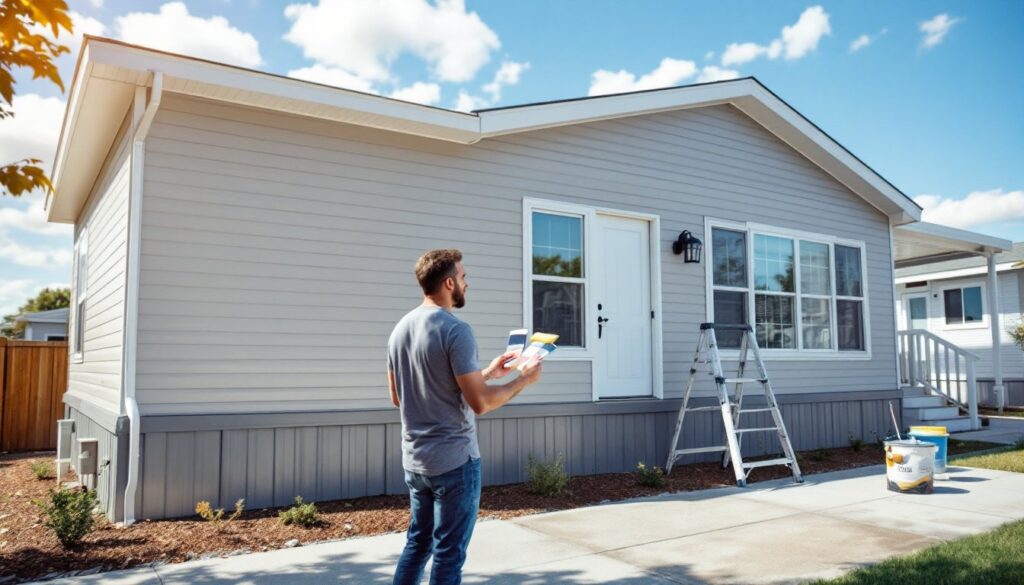
Mobile homes offer an affordable path to homeownership, but their exteriors often suffer from dated, factory-standard paint that drags down curb appeal. A fresh coat of the right exterior paint can completely transform a mobile home’s appearance, boosting visual impact and potentially increasing resale value. Unlike traditional stick-built houses, mobile homes use metal, vinyl, or engineered siding that requires specific paint formulations and surface prep. Choosing colors that complement the home’s architecture while masking visual quirks takes some strategy. This guide covers proven color combinations, selection tips, and prep essentials for painting mobile home exteriors.
Table of Contents
ToggleKey Takeaways
- Exterior paint for mobile homes requires specific formulations based on siding material—metal siding needs rust inhibitors, while vinyl siding requires paints with LRV 55 or higher to prevent heat warping.
- Light to mid-tone exterior paint colors reflect heat more efficiently, reducing cooling costs, while dark colors can increase summer expenses on mobile homes with less insulation than traditional houses.
- Neutral palettes like whites, greiges, and soft grays offer timeless appeal, though bold combinations such as navy blue and white or sage green and cream can dramatically enhance curb appeal and resale value.
- Proper surface preparation—including pressure washing, rust treatment, and priming—determines paint longevity more than color selection, with metal siding requiring 48-hour drying time before priming.
- Test exterior paint colors in actual lighting conditions over several days before committing to a full application, as colors shift dramatically depending on sun exposure and time of day.
Why Choosing the Right Exterior Paint Matters for Mobile Homes
Mobile homes face unique challenges that make color selection more critical than typical residential painting projects. Most manufactured homes feature horizontal siding lines and lower rooflines that can make the structure appear elongated or squat if paint colors emphasize those proportions.
Heat absorption is a serious consideration. Mobile homes have less insulation than site-built houses, typically R-11 in walls versus R-13 to R-21 in traditional construction. Dark exterior colors absorb more solar heat, driving up cooling costs in summer months. Light to mid-tone colors reflect heat better and keep interiors more comfortable.
Material compatibility dictates paint selection. Metal siding requires acrylic latex paint formulated for metal surfaces with rust inhibitors. Vinyl siding can warp under dark paint that absorbs too much heat, many manufacturers void warranties if paint darker than a certain Light Reflectance Value (LRV) is applied. Always check your siding manufacturer’s guidelines before selecting colors.
Paint quality directly impacts longevity. Exterior paint on mobile homes endures constant expansion and contraction from temperature swings. Premium 100% acrylic latex paints with UV inhibitors last 7-10 years, while budget formulations may fade or chalk within 3-4 years. Expect to pay $30-$50 per gallon for quality exterior paint versus $20-$25 for builder-grade options.
Classic and Timeless Mobile Home Color Schemes
Neutral color schemes remain the safest bet for mobile home exteriors, offering broad appeal and flexibility with landscaping and accent features. These palettes work across architectural styles and don’t date quickly.
Neutral Palettes That Never Go Out of Style
Whites and off-whites create a clean, crisp appearance that makes mobile homes look larger and better maintained. Pure white (such as Benjamin Moore’s Chantilly Lace or Sherwin-Williams’ Pure White) works well for homes with interesting architectural details, while warmer off-whites like Alabaster or Swiss Coffee soften harsh lines common in manufactured housing. Pair white body paint with charcoal or black trim for a modern farmhouse aesthetic, or use soft gray trim for a coastal vibe.
Greige combinations (gray-beige hybrids) bridge warm and cool tones, complementing various roof colors and natural surroundings. Sherwin-Williams’ Accessible Beige or Benjamin Moore’s Revere Pewter serve as versatile body colors. These mid-tone neutrals hide dirt better than pure white while maintaining a light, open appearance. Pair greige bodies with white trim and a darker greige or charcoal for shutters and doors.
Two-tone gray schemes add depth without bold color commitments. Use a light gray (LRV 60-70) for the body and a darker gray (LRV 30-40) for trim, skirting, and accents. This creates visual interest and helps break up the horizontal lines that make some mobile homes appear stretched. Designers have found that warm whites, greige, and earth tones improve curb appeal significantly.
Soft taupe and beige palettes work particularly well in desert and southwestern settings. These warm neutrals blend with natural landscapes while reflecting heat efficiently. Pair with cream or white trim and consider a terra cotta or sage accent door.
Bold and Modern Color Combinations for Maximum Impact
Homeowners willing to embrace color can create striking exteriors that set their mobile homes apart from standard-issue manufactured housing. Bold schemes require more planning but deliver memorable results.
Navy blue and white creates a nautical-inspired look that works in various settings. Use navy (like Benjamin Moore’s Hale Navy) for the body with crisp white trim. This high-contrast scheme draws attention to architectural details and makes the home appear more substantial. Navy reads sophisticated rather than flashy and photographs well if resale is a future consideration.
Charcoal gray with natural wood accents delivers contemporary appeal. A deep charcoal body (LRV 20-30) paired with white or light gray trim creates modern contrast. Add stained cedar or composite wood accents around the entry, shutters, or as decorative battens to warm the palette. This scheme works especially well on single-wide homes, adding perceived width through horizontal wood accent boards.
Sage green and cream brings an organic, relaxed feel. Sherwin-Williams’ Clary Sage or Benjamin Moore’s Saybrook Sage offer muted green tones that complement natural surroundings without appearing dated. Cream or soft white trim keeps the look fresh. Add black or oil-rubbed bronze hardware and light fixtures for grounding contrast.
Warm terracotta or rust tones suit southwestern and desert climates. These earthy colors blend with arid landscapes while adding warmth. Pair with cream trim and consider a deep teal or turquoise accent door for a pop of complementary color. Terracotta reads as intentional and sophisticated when executed with quality paint and coordinated accents.
Coastal and Farmhouse-Inspired Paint Ideas
Two dominant design trends, coastal and modern farmhouse, translate particularly well to mobile home exteriors, offering design coherence and broad market appeal.
Coastal blues and whites evoke beach cottage charm. Soft sky blue or weathered gray-blue bodies paired with bright white trim create an airy, relaxed aesthetic. Benjamin Moore’s Breath of Fresh Air or Sherwin-Williams’ Rainwashed offer approachable blue tones that don’t overwhelm. Add natural wood railings or white vinyl railings with decorative balusters to complete the coastal look.
Weathered gray schemes mimic driftwood and aged cedar shingles. Mid-tone grays with slight brown or blue undertones (like Sherwin-Williams’ Cityscape or Benjamin Moore’s Kendall Charcoal lightened 50%) pair with crisp white trim. This palette works year-round and across regions, offering the relaxed feel of coastal design without being location-specific. These colors integrate well with design inspiration from coastal-focused resources that showcase weathered palettes.
Modern farmhouse white-on-white uses subtle contrast between body and trim rather than stark color differences. An off-white body (such as Sherwin-Williams’ Alabaster) with Pure White trim creates dimension through sheen differences rather than color. Add black windows, light fixtures, and house numbers for modern farmhouse punch. This scheme makes mobile homes appear larger and more upscale.
Barn red with white trim delivers classic farmhouse character. True barn red or deep russet bodies paired with bright white trim create high visual impact. This bold choice works best on mobile homes with front porches, gabled entries, or other architectural features that break up siding expanses. Add black or dark bronze metal roofing if replacing the roof to complete the farmhouse aesthetic.
Tips for Selecting the Perfect Exterior Paint Colors
Strategic color selection prevents costly repaints and buyer’s remorse. Follow these guidelines before committing to paint purchases.
Test colors in actual conditions. Purchase sample sizes (usually $5-$8 per pint) and paint 2′ × 2′ test squares on different sides of the home. Observe colors in morning, midday, and late afternoon light over several days. Colors shift dramatically depending on sun exposure, what looks perfect in a paint chip may appear washed out or too intense on actual siding.
Consider the roof color. The roof occupies significant visual space and limits color options. Gray roofs pair well with most colors. Brown or tan roofs harmonize with warm neutrals, greiges, and earth tones but clash with cool grays or blues. White or light gray roofs offer maximum flexibility.
Account for fixed elements. Skirting, existing trim, brick foundations, and nearby structures influence color choices. If the mobile home sits in a park with color restrictions, confirm approved palettes before purchasing paint. Some communities limit color choices to maintain visual cohesion.
Use the 60-30-10 rule. Allocate 60% of the exterior to the body color, 30% to a secondary color (trim, skirting), and 10% to accent colors (door, shutters). This proportion creates balanced visual interest without overwhelming the eye.
Check Light Reflectance Values (LRV) for vinyl siding. Most vinyl manufacturers require LRV of 55 or higher to prevent heat warping. LRV measures how much light a color reflects on a 0-100 scale (0 = absolute black, 100 = pure white). Paint retailers can provide LRV data for specific colors.
Factor in maintenance. Light colors show dirt and mildew less than mid-tones but require frequent cleaning. Very dark colors fade faster in intense sun. Mid-tone earth colors (tans, soft grays, muted greens) often provide the best balance of appearance and low maintenance.
Preparing and Painting Your Mobile Home Exterior
Proper preparation determines paint longevity more than color selection or paint quality. Mobile home exteriors demand specific prep approaches based on siding material.
Safety and permits: Exterior painting typically doesn’t require permits, but always check local regulations. Wear safety glasses, work gloves, and an N95 respirator when pressure washing, scraping, or sanding. Use fall protection (harness and anchor points) when working above 6 feet on ladders or scaffolding.
Metal siding preparation: Remove all loose paint with a wire brush or paint scraper. Sand glossy surfaces with 80-grit sandpaper to create mechanical adhesion. Treat any rust with a rust converter or naval jelly, then prime with a rust-inhibiting metal primer. Pressure wash at 1,500-2,000 PSI to remove chalking (white powder residue) and dirt. Allow 48 hours drying time before priming.
Vinyl siding preparation: Never sand vinyl, it creates surface damage. Pressure wash at 1,200-1,500 PSI using a 25-degree or 40-degree nozzle tip. Mix TSP (trisodium phosphate) cleaner at 1 cup per gallon of water to cut grease and mildew. Rinse thoroughly and let dry 24-48 hours. Apply an acrylic latex bonding primer formulated for vinyl if the existing color is significantly different from the new color.
Paint application: Use an airless sprayer (3,000 PSI minimum) for fastest, most uniform coverage on mobile home siding. A sprayer covers 200-300 square feet per hour versus 75-100 with a roller. Back-roll immediately after spraying to work paint into seams and improve adhesion. Alternatively, use a 9-inch roller with ½-inch nap for horizontal siding. Expect to apply two coats for full coverage and color saturation.
Typical material needs for a 14′ × 70′ single-wide: 8-12 gallons of body paint, 2-3 gallons of trim paint, 4-6 gallons of primer (if needed). Coverage varies by siding texture and condition. Paint in temperatures between 50°F and 85°F with humidity below 70% for optimal curing. When tackling substantial home renovation ideas for beginners, exterior painting delivers high visual impact relative to effort.
Timeline expectations: A single-wide mobile home (14′ × 60-70′) typically requires 20-30 hours of prep and 12-16 hours of painting with two coats. A double-wide (24′ × 60-70′) may take 35-45 hours of prep and 20-25 hours of painting. Many homeowners document their projects and share detailed renovation examples that include exterior transformations.
Consider hiring professionals for homes with extensive rust, failing paint, or hard-to-reach areas. Professional painters charge $1.50-$3.50 per square foot for mobile home exteriors, including prep, materials, and labor. DIY material costs typically run $800-$1,800 for a single-wide, $1,400-$2,800 for a double-wide, depending on paint quality and amount of primer needed.