A well-designed patio extends living space beyond four walls and creates a functional outdoor zone for dining, lounging, or entertaining. Whether working with a small concrete slab or a sprawling backyard, homeowners can transform a basic outdoor area into a customized retreat. The key is matching materials, furniture, and features to climate, budget, and intended use. This guide walks through practical patio upgrades, from surface choices to lighting, that balance aesthetics with durability and real-world performance.
Table of Contents
ToggleKey Takeaways
- House patio ideas should prioritize matching materials, furniture, and features to your climate, budget, and intended use—starting with durable surface choices like concrete ($6–$12/sq ft), pavers ($3–$5/sq ft), or composite decking ($8–$12/sq ft installed).
- Proper furniture sizing and placement are critical: allow 24–30 inches of clearance behind chairs and keep dining table edges at least 36 inches from walls to maximize functionality and traffic flow.
- Shade structures like pergolas, cantilever umbrellas, or retractable awnings extend usable outdoor hours and protect furniture from UV damage, with permanent structures requiring permits and professional installation.
- Strategic lighting combines low-voltage LED systems for ambient glow, recessed deck lights for safety, and smart controls for flexibility—always install outdoor fixtures with GFCI protection per electrical code.
- Budget-friendly upgrades like concrete staining, outdoor rugs, DIY fire pits, and pallet furniture deliver significant visual impact without major expense or professional help.
- Layering landscaping, raised planter beds, and native plants softens hardscaping, defines patio boundaries, and reduces long-term maintenance while creating a welcoming outdoor retreat.
Choosing the Right Patio Material for Your Home
Surface material dictates maintenance, longevity, and overall cost. Concrete remains the most affordable option, typically running $6–$12 per square foot for a basic pour. A 4-inch slab over compacted gravel meets most residential requirements, though local codes may mandate thicker pours or rebar reinforcement in frost-prone areas. Stamped or stained finishes add texture and color but increase labor costs.
Pavers, brick, concrete, or natural stone, offer modular flexibility and easier repairs. Concrete pavers start around $3–$5 per square foot (material only), while natural flagstone can exceed $15–$20. Installation requires a leveled crushed stone base (typically 4–6 inches) topped with a 1-inch sand bed for drainage and stability. Polymeric sand swept into joints locks pavers in place and resists weed growth.
Wood decking and composite boards suit elevated patios or second-story spaces. Pressure-treated lumber is budget-friendly but demands regular sealing. Composite decking costs more upfront, $8–$12 per square foot installed, but eliminates staining and resists rot. Both materials require proper joist spacing (typically 16 inches on center) and adequate ventilation underneath to prevent moisture buildup.
For a rustic or permeable surface, consider crushed gravel or decomposed granite. These materials drain well, cost $2–$4 per square foot, and suit informal seating areas. Edge restraint (steel, aluminum, or treated wood) keeps loose fill contained and maintains clean borders.
Creating Comfort with Furniture and Seating Arrangements
Furniture scale and material determine how functional a patio feels. Measure the patio dimensions before shopping: a common mistake is cramming oversized sectionals into tight spaces. Allow 24–30 inches of clearance behind chairs for easy movement, and keep dining table edges at least 36 inches from walls or planters.
Aluminum frames resist rust and stay lightweight, making them easy to rearrange. Powder-coated finishes hold up better than painted steel. Resin wicker over aluminum frames blends durability with a softer look, though UV exposure can cause fading after several seasons. Teak and eucalyptus offer natural weather resistance but require annual oiling to maintain color.
Cushions and upholstery fabrics should carry a UV and mildew-resistant rating. Solution-dyed acrylic (like Sunbrella) resists fading and moisture better than untreated polyester. Store cushions during heavy rain or winter to extend lifespan.
Built-in seating, concrete benches, low masonry walls with cushions, or pressure-treated lumber frames, saves floor space and defines zones. Cap masonry with bluestone or concrete pavers for a finished edge. For wooden bench frames, use 2×4 or 2×6 framing with lag bolts anchored into the patio surface or adjacent structure.
Consider traffic flow. Arrange seating to face focal points (fire pits, views, or garden beds) and leave clear paths between entry doors and seating clusters.
Adding Shade and Weather Protection
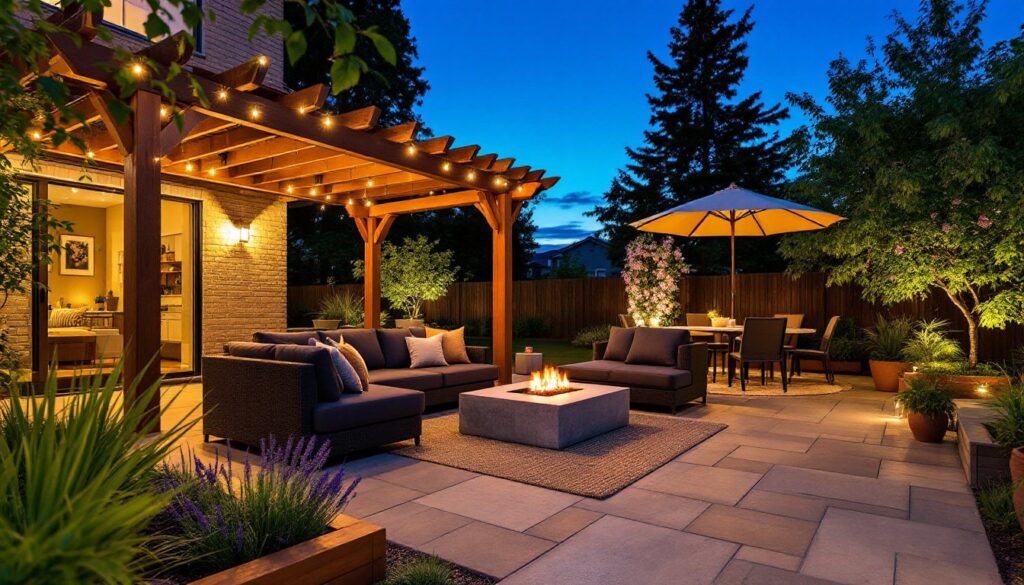
Shade structures extend usable hours and protect furniture from UV damage. Pergolas offer partial shade and architectural interest. Most kits use 4×4 or 6×6 posts set in concrete footings below the frost line (check local frost depth: 36–48 inches is typical in northern climates). Rafters spaced 12–16 inches apart provide dappled light: adding a retractable canopy or shade cloth increases coverage.
Cantilever umbrellas deliver flexible shade without a center pole obstructing table space. Look for bases weighing at least 75–100 pounds or models that bolt into the patio surface. Wind ratings matter, umbrellas rated for 20+ mph gusts stay upright during afternoon storms.
Retractable awnings mount to exterior walls and extend 8–12 feet. Manual crank models start around $300–$500: motorized versions with wind sensors run $800–$2,000. Verify that wall framing can support the mounting brackets, lag bolts should hit wall studs or use toggle anchors rated for the awning’s weight.
For year-round use, consider a pavilion or screened enclosure. These structures often require building permits and engineered plans, especially in high-wind or snow-load zones. Permanent roofs demand proper flashing, gutters, and integration with the home’s drainage system to prevent water intrusion.
Sail shades, tensioned fabric panels anchored to posts or walls, suit modern aesthetics and cost less than rigid structures. Tension hardware must anchor into solid framing or concrete footings, not just siding or trim.
Lighting Your Patio for Ambiance and Function
Outdoor lighting balances safety, task illumination, and mood. Low-voltage LED systems (12V or 24V) are DIY-friendly and energy-efficient. A typical transformer powers 100–200 watts: string lights, path lights, and accent fixtures connect via plug-in wiring. Bury cable 6–12 inches deep or run along fence lines to avoid trip hazards.
String lights remain a popular choice for ambient lighting. Edison bulbs or globe LEDs strung between posts, trees, or pergola beams create a casual, inviting glow. Use outdoor-rated wire (look for weatherproof jackets rated for wet locations) and ensure connections stay off the ground. Many homeowners appreciate the relaxed lighting styles that define welcoming outdoor spaces.
Recessed deck lights flush-mount into stair risers or along deck edges for unobtrusive task lighting. These fixtures prevent trips on steps and highlight elevation changes. Install during deck construction or retrofit by drilling holes in existing boards, waterproof housings prevent moisture damage.
For dining areas, consider a pendant or chandelier mounted under a pergola or covered section. These fixtures require a weatherproof junction box and GFCI protection per NEC Article 210.8 (outdoor outlets and fixtures must have ground fault protection). Hire a licensed electrician if running new 120V circuits: this work often requires a permit.
Solar path lights and spotlights offer cord-free installation but depend on adequate sunlight. Place solar panels in unshaded areas for consistent charging. Battery life and brightness vary widely: read reviews before committing to budget models.
Dimmer switches or smart controls let occupants adjust brightness for different activities, bright for grilling, dim for evening conversation.
Incorporating Landscaping and Greenery
Plants soften hardscaping and define patio boundaries. Container gardens offer flexibility and mobility. Use pots with drainage holes and fill with quality potting mix, not garden soil, which compacts and drains poorly in containers. Group pots in odd numbers (3, 5, or 7) for visual balance.
Raised planter beds built from 2×6 or 2×8 treated lumber frame the patio perimeter and separate seating from lawn areas. Line interiors with landscape fabric to slow soil erosion. Fill beds with a mix of topsoil and compost: depth should accommodate root systems (12–18 inches for perennials, 24+ inches for shrubs).
Vertical gardens, trellises, wall-mounted planters, or modular living walls, maximize greenery in small spaces. Train climbing vines like clematis, jasmine, or hops on sturdy supports anchored into wall studs or fence posts. Many compact patio designs draw inspiration from creative garden layouts that emphasize vertical growth.
Privacy hedges and tall grasses (like bamboo, ornamental grasses, or arborvitae) screen patios from neighbors. Plant spacing depends on mature width: most hedges need 2–4 feet between centers for full coverage within a few seasons. Check local ordinances, some jurisdictions limit hedge height near property lines.
Incorporate native plants to reduce water and maintenance demands. Drought-tolerant species like lavender, sedum, or ornamental sage thrive in full-sun patio environments and attract pollinators.
Edging (steel, aluminum, or brick) keeps mulch and soil contained and creates clean transitions between patio surfaces and planting beds.
Budget-Friendly DIY Patio Upgrades
Small improvements deliver big visual impact without major expense. Staining or painting existing concrete refreshes tired slabs. Concrete stain penetrates the surface for a translucent, variegated finish: concrete paint provides opaque color. Clean and etch the surface with a concrete cleaner or diluted muriatic acid (wear gloves and eye protection), then apply stain or paint per manufacturer’s dry times. Seal with a clear acrylic sealer for UV and moisture protection.
Outdoor rugs define seating zones and add color. Polypropylene rugs resist mold and fade less than natural fibers. Hose them off periodically and let them dry fully before replacing.
DIY fire pits transform patios into gathering spots. Stacked stone or concrete block fire rings cost $100–$300 in materials. Place fire pits at least 10 feet from structures and overhead combustibles. Use fire-rated bricks for the inner ring and cap with flagstone or concrete caps. Always check local fire codes, some municipalities ban open fires or require permits.
Pallet furniture, benches, coffee tables, or vertical planters, recycles industrial materials into functional pieces. Sand rough edges, treat with exterior wood stain, and add cushions. Not all pallets suit outdoor use: avoid chemically treated pallets marked “MB” (methyl bromide).
String lights, lanterns, and solar stakes deliver ambiance for under $50. Drape lights along fences or wrap posts. Solar lanterns scattered on steps or tables require no wiring.
Repurpose indoor furniture with weatherproof spray paint and outdoor-grade cushions. A coat of rust-inhibiting metal primer and topcoat extends the life of old metal chairs or tables. Seasonal refresh projects offer dozens of creative makeover ideas for outdoor furniture.
Stenciling or stamping patterns onto concrete mimics the look of tile or pavers at a fraction of the cost. Use concrete stencils and exterior paint for durable results.
Conclusion
Transforming a patio doesn’t require a complete teardown. Strategic upgrades, durable materials, comfortable furniture, effective lighting, and integrated greenery, turn basic outdoor space into a functional extension of the home. Start with structural priorities (surface, shade, drainage), then layer in furnishings and details. Most projects scale to fit modest budgets and DIY skill levels, though electrical work and permanent structures often need professional input and permits. With thoughtful planning and honest assessment of time and ability, any homeowner can build an outdoor space that performs season after season.