Choosing flooring for an entire home is one of those decisions that shapes every other design choice a homeowner makes. Get it right, and the result is a cohesive, flowing space that feels intentional. Get it wrong, and rooms feel disjointed, resale value takes a hit, and the homeowner spends years living with regret underfoot. In 2026, the trend is moving toward unified flooring throughout most or all of the home, with strategic transitions where lifestyle or function demands it. This guide breaks down the top whole-house flooring options, from classic hardwood to modern luxury vinyl, and explains where each material shines, and where it doesn’t.
Table of Contents
ToggleKey Takeaways
- Unified whole house flooring creates visual flow, reduces installation costs, and improves resale value compared to mixed materials throughout your home.
- Hardwood remains the premium choice for longevity and refinishability but is unsuitable for bathrooms and moisture-prone areas due to swelling and warping risks.
- Luxury vinyl plank (LVP) provides waterproof, budget-friendly whole house flooring that mimics hardwood appearance at 60-70% lower cost than solid wood alternatives.
- Engineered wood offers stability advantages over solid hardwood with better moisture resistance, making it ideal for basements and radiant heating systems while preserving real wood aesthetics.
- Large-format porcelain tile delivers unmatched durability and water resistance for whole house installations, especially when paired with radiant floor heating for comfort.
- Strategic transitions between flooring types—such as hardwood in living areas and tile in bathrooms—optimize performance in specific zones while maintaining visual cohesion.
Why Choosing Consistent Flooring Throughout Your Home Matters
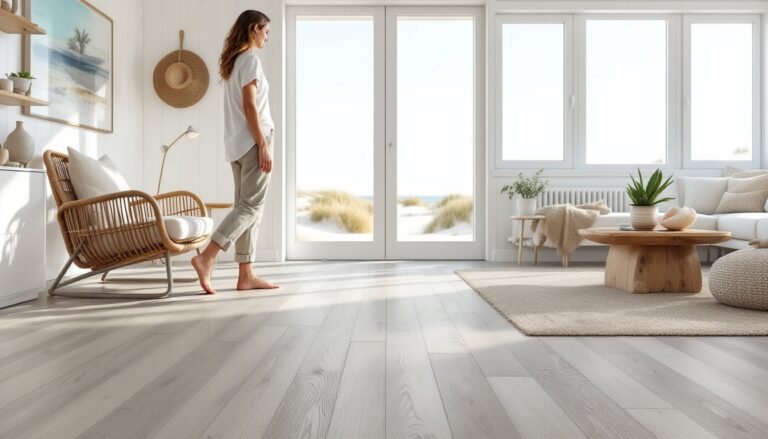
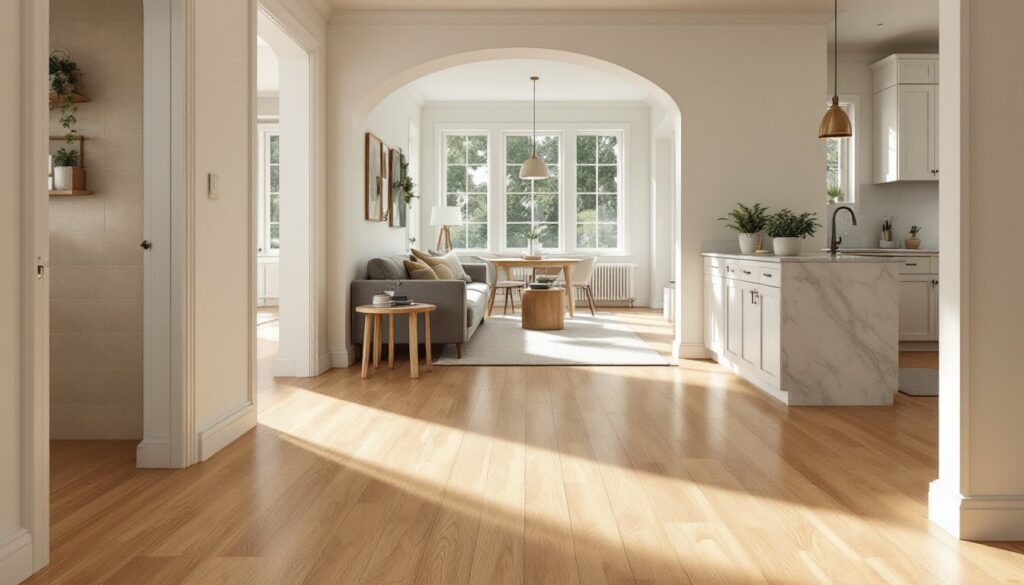
A unified floor creates visual flow that makes every room feel larger and the home feel more cohesive. When flooring changes from room to room, the eye stops at each transition, chopping the space into smaller, disconnected zones. That’s fine in some layouts, but in open-concept homes or smaller footprints, consistent flooring eliminates unnecessary breaks.
It also simplifies the decision-making process. Instead of choosing five different materials and coordinating transitions, the homeowner picks one product, orders in bulk, and often saves on both material and installation costs. Contractors appreciate it too, fewer seams, fewer transitions, fewer chances for mistakes.
There are practical advantages beyond aesthetics. Maintenance becomes easier when the same cleaner works on every square foot. Repairs and replacements are straightforward because the homeowner isn’t hunting down discontinued tile from 2018. And when it’s time to sell, buyers consistently rank homes with cohesive flooring higher than those with a patchwork of materials.
Hardwood Flooring: Timeless Elegance for Every Room
Solid hardwood remains the gold standard for whole-house flooring. It’s durable, refinishable, and adds real resale value. Species like red oak, white oak, and hard maple are common, with Janka hardness ratings between 1,290 and 1,450, making them suitable for high-traffic areas. Exotic options like Brazilian cherry (2,350 Janka) offer even more durability but come at a premium.
Solid hardwood is milled from a single piece of wood, typically 3/4 inch thick, and can be sanded and refinished multiple times over its lifespan, often 50+ years. That’s a significant advantage over other materials. Installation requires a stable subfloor, and the wood needs to acclimate to the home’s humidity for at least 72 hours before installation to prevent warping.
The biggest limitation? Moisture. Solid hardwood should not be installed in full bathrooms, laundry rooms, or basements. Humidity and direct water exposure cause swelling, cupping, and permanent damage. Many homeowners address this by using updated renovation techniques to transition to tile in wet areas.
Finishing options matter. Pre-finished hardwood arrives with a factory-applied polyurethane or aluminum oxide finish that’s ready to walk on immediately. Site-finished floors allow for custom stain colors and a seamless look between boards, but require several days of drying time and generate dust and fumes. Both approaches work: the choice depends on timeline and customization needs.
Pricing runs from $6 to $12 per square foot for materials, with installation adding another $4 to $8 per square foot depending on the region and complexity. Subfloor prep, removal of old flooring, and trim work add to the total. For a 1,500-square-foot home, expect to budget $15,000 to $30,000 for quality hardwood throughout.
Luxury Vinyl Plank: Budget-Friendly Durability Meets Style
Luxury vinyl plank (LVP) has become the go-to choice for homeowners who want the look of hardwood without the cost or maintenance headaches. Modern LVP uses high-definition printing and embossing to mimic wood grain with surprising accuracy. When installed well, it’s nearly indistinguishable from real wood at a glance.
LVP is 100% waterproof, making it suitable for every room, including bathrooms, kitchens, and basements. That’s a major advantage over hardwood and eliminates the need for flooring transitions in moisture-prone areas. The construction typically includes a wear layer (12 to 20 mil for residential use), a printed design layer, a rigid core (SPC or WPC), and an underlayment. Thicker wear layers stand up better to scratches and heavy traffic.
SPC (stone plastic composite) cores are denser and more dimensionally stable, ideal for homes with temperature fluctuations or concrete subfloors. WPC (wood plastic composite) cores offer a softer feel underfoot and better sound dampening, which matters in multi-story homes. Both types install as floating floors with click-lock edges, requiring no glue or nails. A DIYer with basic tools can handle installation, though transitions and doorways require careful measuring and a jamb saw.
One downside: LVP can’t be refinished. Once the wear layer is compromised, the plank must be replaced. And while it resists moisture, it’s still vulnerable to cuts from sharp objects and denting from heavy furniture without protective pads.
Pricing ranges from $2 to $7 per square foot for materials, with installation adding $1 to $3 per square foot if hiring a pro. For a whole-house install, that’s significantly less than hardwood. Many budget-friendly renovation projects start with LVP for this reason.
Engineered Wood: The Best of Both Worlds
Engineered hardwood splits the difference between solid wood and vinyl. It features a real wood veneer (typically 2 to 6 mm thick) bonded to layers of plywood or high-density fiberboard. The cross-grain construction makes it more stable than solid wood, reducing expansion and contraction from humidity changes.
This stability allows engineered wood to be installed in more locations than solid hardwood, including basements (above grade) and over radiant heat systems. It’s not waterproof, so full bathrooms are still off-limits, but it handles kitchen spills and humidity better than solid planks.
Thicker veneer layers mean more refinishing opportunities. A 6 mm veneer can be sanded and refinished once or twice: a 2 mm veneer is essentially a one-and-done product. That’s still more longevity than LVP, which can’t be refinished at all. Homeowners weighing long-term value should consider veneer thickness carefully, especially in high-traffic areas.
Installation methods vary. Some engineered products are designed for glue-down installation over concrete, others float with click-lock systems similar to LVP, and some can be nailed or stapled to wood subfloors. The flexibility makes engineered wood a strong candidate for whole-house projects where subfloor conditions vary.
Expect to pay $4 to $10 per square foot for materials and $3 to $6 per square foot for installation. It’s pricier than LVP but often cheaper than solid hardwood, positioning it as a middle-ground option for homeowners who want real wood but need better moisture resistance. Projects that incorporate modern design trends often lean on engineered wood for its versatility.
Tile Throughout: Modern Minimalism with Practical Benefits
Porcelain and ceramic tile offer unmatched durability and water resistance, making them a practical choice for whole-house installations. Porcelain is denser and more impervious to moisture than ceramic, with a water absorption rate below 0.5%, which qualifies it for indoor and outdoor use. Ceramic is slightly more porous but still performs well in most residential settings.
Large-format tiles, 12×24 inches or larger, have become the standard for modern whole-house projects. Fewer grout lines create a cleaner, more seamless look and reduce maintenance. Rectified edges (precision-cut at the factory) allow for tight grout joints, often as narrow as 1/16 inch, which enhances the minimalist aesthetic.
Tile’s hardness is both an advantage and a drawback. It stands up to scratches, dents, and moisture better than any wood or vinyl product, but it’s cold and unforgiving underfoot. Dropped dishes shatter. Long periods of standing can be uncomfortable. Many homeowners address this by installing radiant floor heating beneath the tile, which transforms it into a warm, comfortable surface and adds energy efficiency.
Installation requires more skill than floating floors. Proper substrate prep is critical, tile needs a flat, stable surface, typically cement backer board over the subfloor in wet areas. Thinset mortar must be mixed to the correct consistency, and tiles must be laid level to avoid lippage (uneven edges between tiles). This isn’t a weekend DIY project for most people. Hiring a skilled tile setter ensures professional results and avoids costly mistakes.
Depending on the tile and complexity, materials run $3 to $15 per square foot, with installation adding $5 to $12 per square foot. Radiant heat systems add another $5 to $15 per square foot. Comprehensive flooring guides often emphasize that tile’s upfront cost is offset by decades of low-maintenance performance.
Mixing Flooring Types: Strategic Transitions That Work
Not every home needs identical flooring in every room. Strategic mixing can define spaces, accommodate different performance needs, and add visual interest. The key is planning transitions thoughtfully so they enhance the layout instead of disrupting it.
Common transition points include doorways, where T-molding or reducer strips create a clean edge between materials of different thicknesses. Open-concept spaces can use flooring changes to subtly define zones, tile in the kitchen and hardwood in the dining area, for example. The transition works best when aligned with a natural sight line or architectural feature, like a beam or the edge of an island.
Moisture-prone areas are the most logical place to switch materials. Many homeowners install hardwood or LVP throughout the main living areas, then transition to porcelain tile in bathrooms and the laundry room. This approach protects wood from water damage while maintaining visual continuity in the majority of the home. Renovation planning guides often recommend this strategy for durability.
Another consideration: carpet in bedrooms. While hard surfaces dominate in 2026, some homeowners prefer the warmth and sound absorption of carpet upstairs or in sleeping areas. Installing the same LVP or engineered wood on the main floor and stairs, then transitioning to carpet at the bedroom thresholds, creates a clear separation between public and private zones.
When mixing materials, keep the color palette and style consistent. A light oak LVP paired with warm beige tile feels cohesive. Mismatched tones, cool gray wood next to terracotta tile, create visual chaos. Experts often recommend selecting durable kitchen flooring that complements adjacent living spaces for a unified look.
Conclusion
Whole-house flooring decisions shape both the function and feel of a home for years to come. Hardwood delivers timeless appeal and refinishability, LVP offers waterproof convenience at a lower price, and engineered wood bridges the gap. Tile excels in durability and works beautifully in modern, minimalist designs. Strategic mixing allows homeowners to optimize each space while maintaining overall cohesion. Whatever the choice, proper installation and realistic expectations about maintenance will determine long-term satisfaction.